


Yinka Shonibare CBE
Wind Sculpture (SG) II
2021
Read more
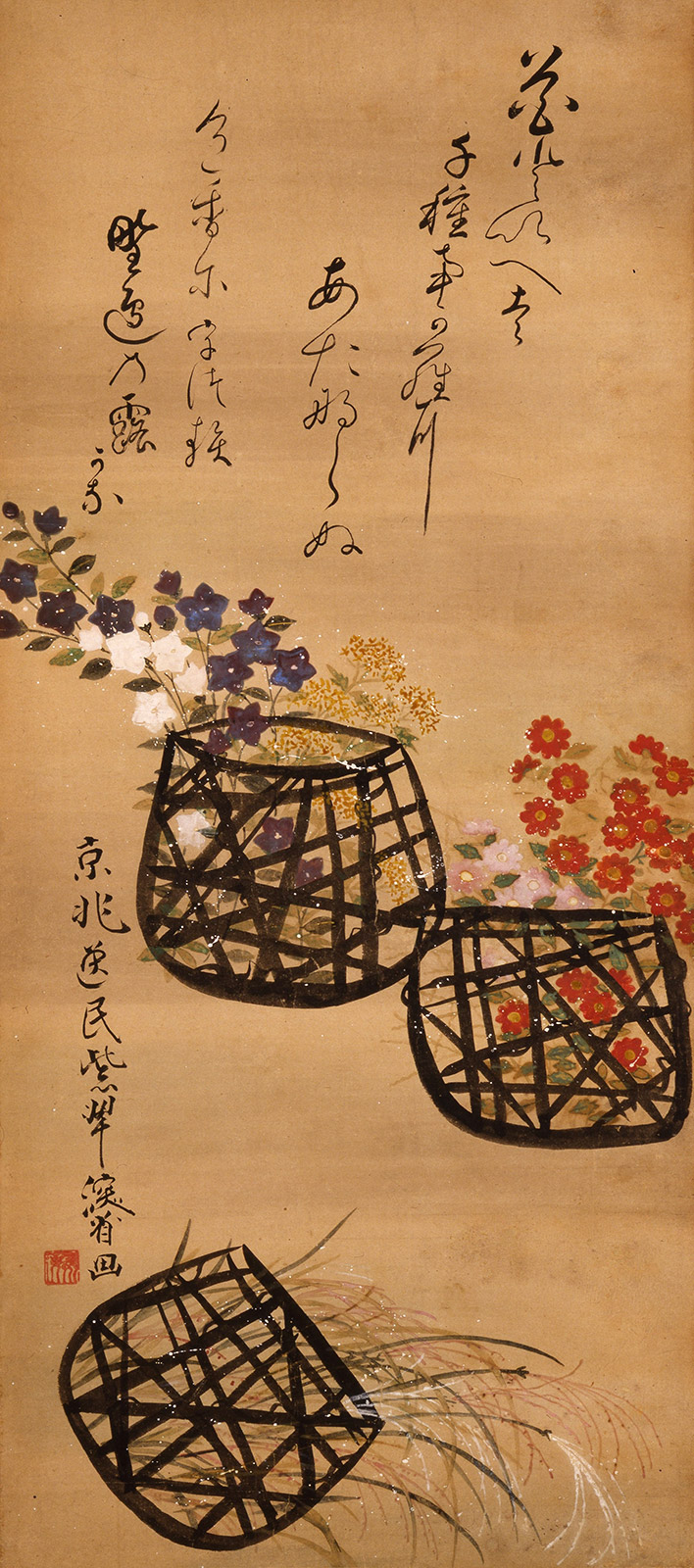
Edo Period, 18th century Color on paper, hanging scroll
112.5cm x 49.2cm
Matsunaga Collection
1633 - 1743
Three baskets rendered in sumi ink are filled with autumn flowers and grasses. Japanese pampas grass, chrysanthemums, ominaeshi or maiden flower, and Chinese bellflower are vividly depicted, each filled with white dew that gives a feeling of freshness and vital power.
At the same time, the flowers are surrounded by a faint dark haze, and there is a lonely atmosphere. There may be a light wind blowing, and the flowers and grasses are bent, especially the bellflower is almost blown out of the frame. The poetic inscription on the upper part may be a bit slanted because of this wind.
The poem, which reads in part “There are a thousand kinds of flowers, and not all soon fade and fall, because their color and scent lives in the dewdrops that give them life,” by a court noble, Sanjonishi Sanetaka, conveys the glorious and evanescent emotions of autumn.
The artist is Ogata Kenzan (1663-1743), active in the Edo Period (1603-1868), was a younger brother of Ogata Korin (1658-1716), known as the greatest artist of the Rimpa school. Kenzan was from a family of kimono fabric dealers who were purveyors to the Imperial family in Kyoto, and he cultivated his great talent for ceramics and painting through interactions with famous monks and court nobles.
2021
Read more
1950
Read more
Japan, Edo Period, 17th century
Read more
1963
Read more
Japan, Heian Period, 12th century
Read more
1994
Read more
China, 15-16th century
Read more
1934
Read more
1931
Read more
1945
Read more
1964
Read more
1910
Read more
1945
Read more
Edo Period, 19th century
Read more
Edo Period, 18th century
Read more
India, 17-18th century
Read more