


Yinka Shonibare CBE
Wind Sculpture (SG) II
2021
Read more
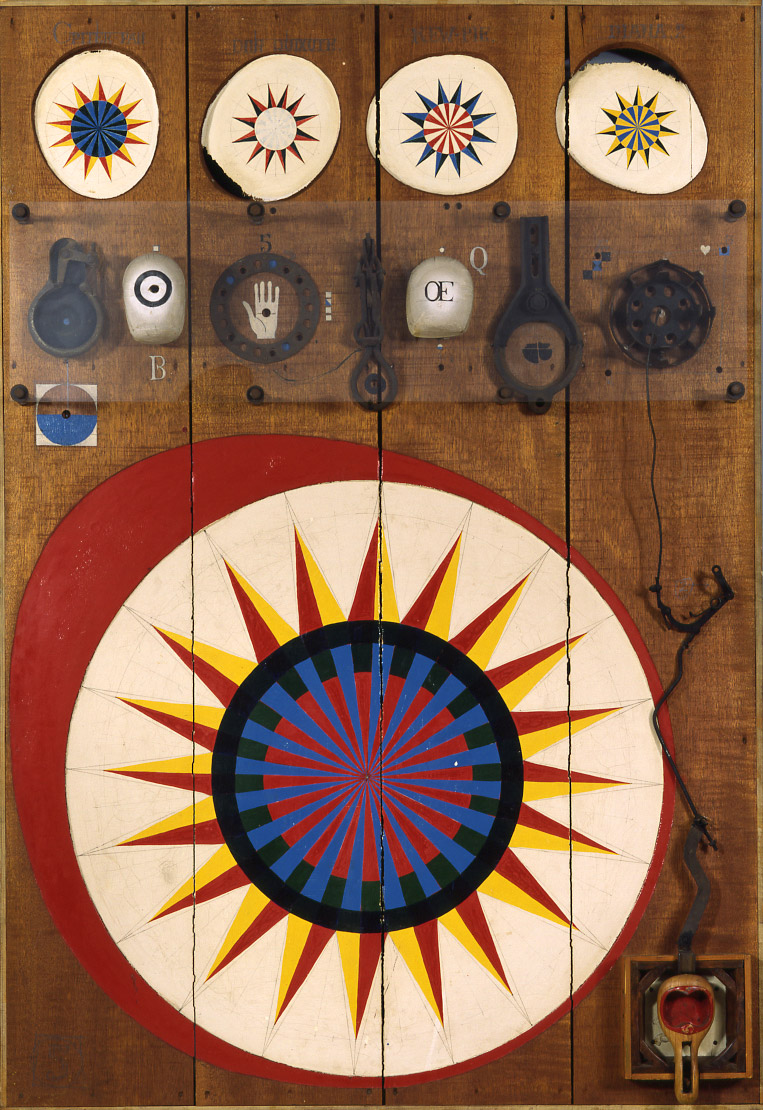
1964 Cashews, enamel, pencil, metal, sponge, and Plexiglas on board
162.2cm x 111.8cm x 13.0cm
b. 1935, Nagasaki
Kikuhata emerged as a member of the avant-garde group Kyushu-ha, organized in 1957. Kyushu-ha called themselves “Anti-Tokyo” and protested a mainstream art world then centered on publicly sponsored exhibitions. They sympathized with the labor movement and sought to draw on the energy of the masses through art. Kikuhata derived his philosophy of art from Kyushu-ha, but his brilliant compositional sense drew acclaim from art world insiders in Tokyo as well. This work was shown in the Third International Young Artists Exhibition in 1964 and was highly praised. More than 30 works in the same series, entitled Roulette, were created prior to this piece. It was exhibited at Minami Gallery, a leading art gallery at the time, in his second solo show in 1964.
A roulette wheel is depicted on a baseboard made of joined pieces of wood, with scrap material attached to its upper part. The materials and motif convey a sense of the vernacular and everyday life. Kikuhata recollected that he had wanted to create paintings that in themselves resembled games. While he appears to be pushing his work closer to popular culture, this piece may imply his sense of crisis and nihilism toward the circumstances, in which even “anti-art” made of scraps could be absorbed as a “product” into the social structure during Japan’s rapid economic growth period.
2021
Read more
1950
Read more
Japan, Edo Period, 17th century
Read more
1963
Read more
Japan, Heian Period, 12th century
Read more
1994
Read more
China, 15-16th century
Read more
1934
Read more
1931
Read more
1945
Read more
1964
Read more
1910
Read more
1945
Read more
Edo Period, 19th century
Read more
Edo Period, 18th century
Read more
India, 17-18th century
Read more