


Yinka Shonibare CBE
Wind Sculpture (SG) II
2021
Read more
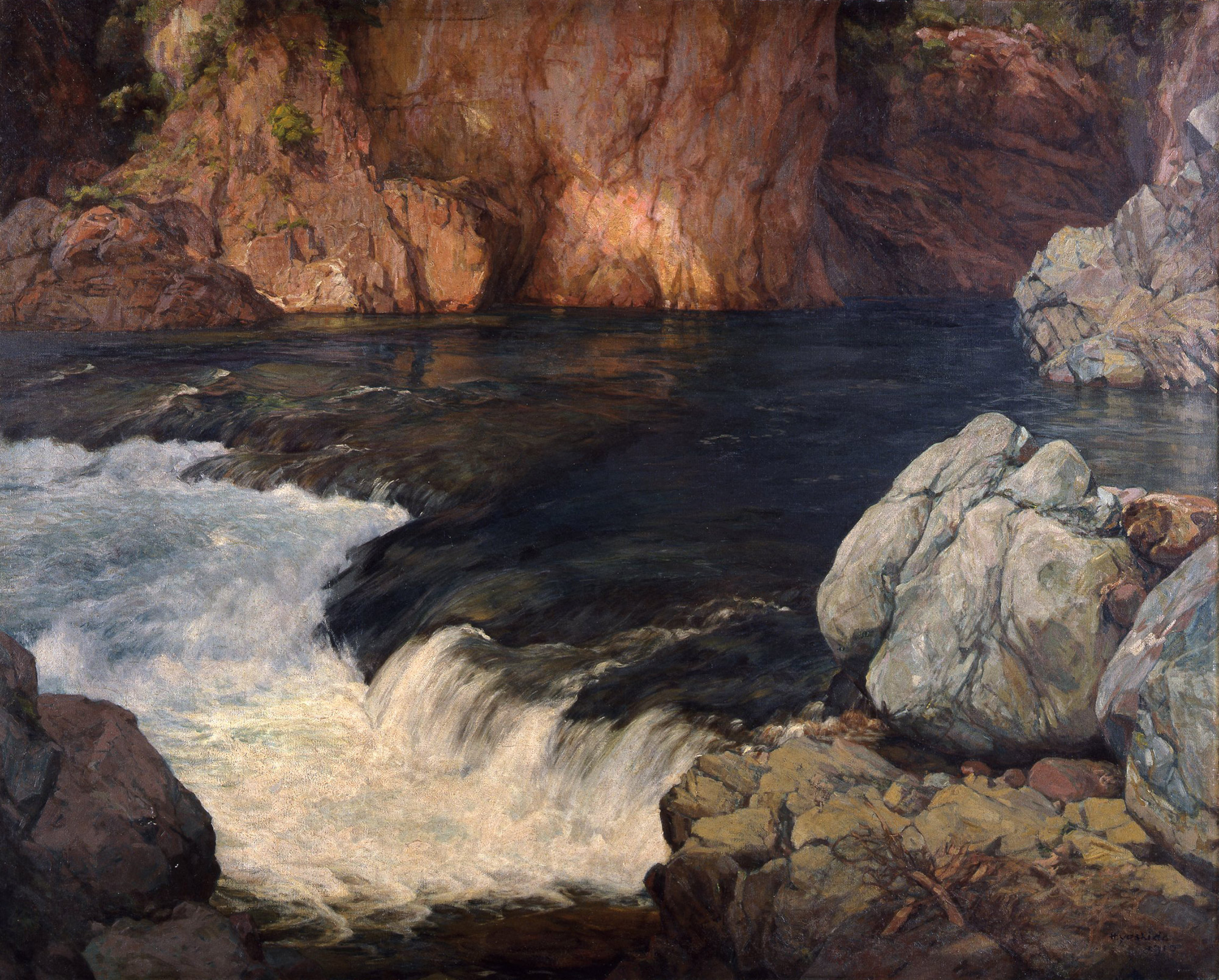
1910 Oil on canvas
119.0cm x 149.0cm
1876, Fukuoka - 1950, Tokyo
Yoshida Hiroshi was born in 1876, the second son of the Ueda family near Kurume, Fukuoka Prefecture, and was later adopted by Yoshida Kisaburo, his art teacher at Shuyukan Junior High School, who recognized his talent for art. Hiroshi took his family name, Yoshida. He moved to Tokyo to continue his studies, and entered the private art school Fudosha. His schoolmates praised his remarkable drawing and painting abilities, and his talent also impressed many art collectors in the United States, which he visited twice in his 20s.
Yoshida stood in opposition to Kuroda Seiki, who had returned from studying in France, and other newly prominent Western-style painters. He reformed the former Meiji Bijutsu-kai, or Meiji Art Association, seen as a conservative group, as the Taiheiyogakai Association, and contributed greatly to the development of Japan’s art world as the leader of this group.
This painting is one of his largest mountain landscapes. It was lauded at the 4th Bunten (Ministry of Education Exhibition), held in 1910, for which he served as a juror. With the freshness of the river splashing through a valley and the greenery reflected in its surface, this is regarded as an early masterpiece that fully conveys the artist’s masterful rendering of nature.
In the mid-1920s, Yoshida began working extensively on woodcuts depicting mountain landscapes and scenes from other Asian countries. These prints were widely admired in Japan and overseas, and many may regard them as Yoshida Hiroshi’s greatest work. However, this large painting completed when he was in his thirties overflows with the expressive power that was to stay with him throughout his life.
2021
Read more
1950
Read more
Japan, Edo Period, 17th century
Read more
1963
Read more
Japan, Heian Period, 12th century
Read more
1994
Read more
China, 15-16th century
Read more
1934
Read more
1931
Read more
1945
Read more
1964
Read more
1910
Read more
1945
Read more
Edo Period, 19th century
Read more
Edo Period, 18th century
Read more
India, 17-18th century
Read more